Luck or Skill? The Role of Probability in Games and Strategy


Luck or Skill? The Role of Probability in Games and Strategy
Whenever we play—whether it’s cards, chess, poker, or fantasy sports—we often ask the same question: how much of success comes down to luck, and how much to skill? Probability sits at the heart of that question. It’s the invisible link between randomness and strategy, and understanding it can mean the difference between a quick loss and a well-earned win.
The Nature of the Game: Chance and Control
Every game contains an element of chance. The roll of a die, the shuffle of a deck, or the unpredictable bounce of a football can’t be fully controlled. Yet it’s precisely this uncertainty that makes games exciting—and that creates room for strategy.
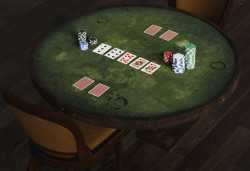
In chess, luck is almost nonexistent. The outcome depends almost entirely on a player’s ability to anticipate moves and plan several steps ahead. In poker, however, luck plays a larger role because the cards are dealt randomly. Still, the best players win more often than average because they understand probabilities and use them to make better decisions over time.
Læs også:



Probability as a Strategic Tool
Understanding probability isn’t just about crunching numbers. It’s about evaluating risk and potential. In poker, players talk about “expected value”—the average outcome of a decision if it were repeated many times. A move with a positive expected value will yield profit in the long run, even if it sometimes loses in the short term.
The same principle applies to sports betting or even stock trading. A bettor or investor who understands probability knows that success isn’t about being right every time, but about finding situations where the odds are in their favor. That requires analysis, patience, and discipline—not just luck.
The Human Factor: Intuition and Bias
Even with a solid grasp of probability, human psychology can lead us astray. We often overestimate our ability to predict outcomes and underestimate the role of chance. This is known as the “illusion of control”—the belief that we can influence random events more than we actually can.
A classic example is the “gambler’s fallacy”—the mistaken belief that if a coin has landed on heads five times in a row, it’s “due” to land on tails next. In reality, the probability remains 50/50. Recognizing these mental traps is a key part of becoming a better player—or a better decision-maker in general.
When Luck Meets Skill
In many games—and in life—it’s the interplay between luck and skill that determines the outcome. Luck can provide a short-term boost, but skill reveals itself over time. The skilled player understands that while they can’t control every outcome, they can control their decisions.
Strategy, then, isn’t about eliminating luck—it’s about managing it. It’s about accepting that losses are inevitable, but that sound decisions, made consistently, lead to success in the long run.
From the Game Table to Real Life
The logic of probability extends far beyond games. It’s used in investing, risk management, sports analytics, and everyday choices. When we decide whether to bring an umbrella, invest in a company, or take a career risk, we’re essentially making small probability assessments—often without realizing it.
Understanding probability isn’t just an advantage for players; it’s a valuable skill for anyone who wants to make better decisions in an uncertain world.
Conclusion: Fortune Favors the Prepared
Luck can’t be controlled—but it can be understood. And the better you understand the role of probability, the more you can use it to your advantage. In the end, it’s not a matter of luck or skill, but how the two interact.
As the saying goes, fortune favors the prepared mind. In games as in life, those who understand probability are the ones most likely to come out ahead in the long run.
Læs også: